Navigating eu-LISA in business aviation


Operations in Europe have always required more preparation than typical domestic trips in much of North America. Overflight permits, landing slots, customs coordination, and country-specific entry requirements are already part of the planning process for operators who regularly fly there. Now there’s more to track.
The European Union (EU) is launching new digital border management systems, adding new considerations for how operators plan trips, choose ports of entry, and handle passenger documents. The requirements aren’t simple, and the timelines have shifted several times.
In this blog, we’ll cover what eu-LISA is and how it impacts your operation. We’ll also show how you can use ForeFlight Trip Support to stay updated on these changes. This way, your operation won’t be caught off guard.
What is eu-LISA?
The European Union Agency for the Operational Management of Large-Scale IT Systems in the Area of Freedom, Security, and Justice (eu-LISA) is responsible for the IT systems that support border control and traveler screening across the Schengen Area. They don’t set immigration policies; each country does that. However, they build and run the infrastructure that enforces them.
Entry/Exit System (EES)
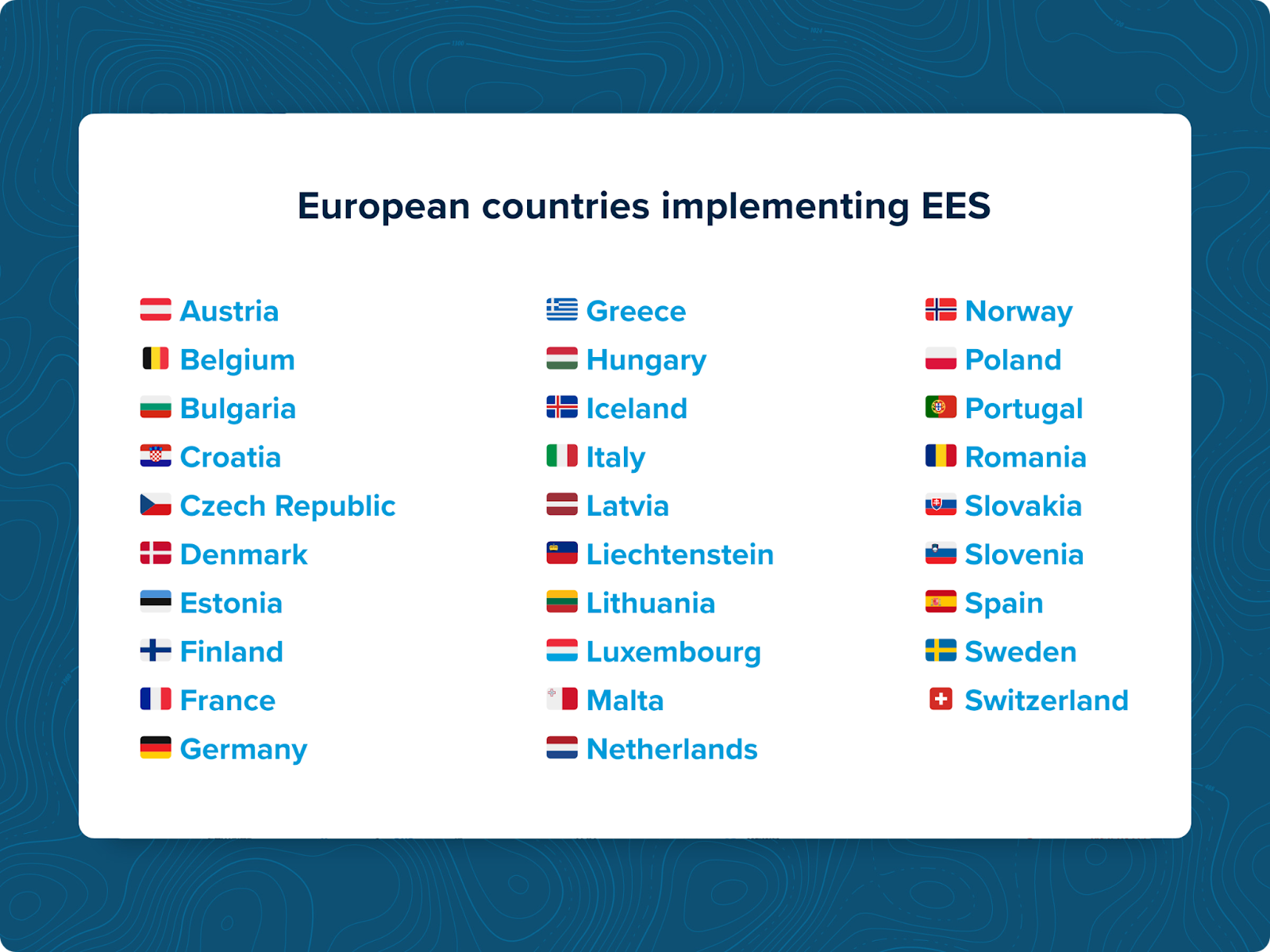
EES replaces manual passport stamping with an electronic record of entries and exits. Starting April 10, 2026, operators flying to the 29 EES countries must use the eu-LISA carrier interface to verify if passengers with short-stay visas have used their allowed entries. This check must be done no earlier than 48 hours before the scheduled departure.
European Travel Information and Authorisation System (ETIAS)
ETIAS is similar to the U.S. electronic travel authorization system. It serves as a pre-travel authorization for travelers who do not need a visa. Once ETIAS launches, operators must check that eligible passengers have valid authorization before boarding. That includes most US passport holders traveling to Europe without a visa.
Operational impact on business aviation
Shifting to digital border management is a simple concept. Paper passport stamps will be replaced with biometric records that track every entry and exit in the Schengen Area. In practice, enrollment has been quite bumpy. Processing times at some airports rose by 70% during EES's early rollout. Lisbon Airport even paused the system when passengers faced delays of up to seven hours. As a result, the European Commission has allowed individual member states to temporarily suspend EES checks for up to 90 days after the April rollout to manage summer travel congestion.
For business aviation, the most significant impact will be on the first entry. Any non-EU passenger or crew member entering the Schengen Area for the first time must enroll in biometric data upon arrival. At Paris-Le Bourget, they have a single mobile unit serving all seven FBOs. The best-case scenario is 2 minutes per passenger for biometric processing if the system runs smoothly. With a full cabin and crew, that can really cause a delay in a tight schedule.
How this impacts flight planning and scheduling
Not all airports have the same infrastructure in place. Also, timelines for implementation vary significantly from one country to another. Scheduling must consider the extra processing time. This is especially important for passengers making their first Schengen entry on the trip. Tight connections, back-to-back legs, and short ground times are much riskier now.
Who has to comply?
The operators
eu-LISA applies to all for-hire types of operations. These would be classified as FAA Part 135 and 125 operators. It also includes not-for-hire operations similar to those that would fall under FAA Part 91 operations that use outsourced management services. If you operate under Part 91, not falling under a managed service, you do not have to comply. If a private person or organization owns the aircraft and a professional operator manages it, the operation must follow EES and ETIAS rules. This applies even if the flights are not open to the public.
Under eu-LISA guidelines, a carrier is defined as “any person or company that provides passenger transport by air, sea, or land.” So, based on this definition and history in Europe, business aviation operators flying into the Schengen Area should expect to be treated as carriers.
The travelers
EES and ETIAS affect non-EU nationals who enter the Schengen Area for short visits. This applies to most US passport holders, UK nationals after Brexit, and crew members from countries that don’t hold a Crew Member Certificate. EU citizens, those with long-term visas, and valid residence permits are exempt.
Why early awareness matters
Compliance with EES and ETIAS is ultimately the traveler’s responsibility, but the operational burden lands on the operator. If a passenger boards without proper documents or authorization, the carrier is responsible. Crew members from countries who don’t hold a Crewmember Certificate will be subject to full EES border procedures rather than existing expedited crew processing, which adds another layer of planning for international crew pairings. Identifying passenger and crew nationalities early helps avoid surprises at the border. Also, understanding what each person needs before departure is key.
How ForeFlight Trip Support helps you stay ahead
eu-LISA is just one example of evolving regulations across the globe. With ForeFlight Trip Support and our team of region-specific specialists, we maintain a strong relationship with local vendors and authorities to stay current on regulatory updates. When something changes, we update that information on your trip. This way, it won't cause any issues for your operation.
Translating regulation into planning guidance
Knowing EES exists and understanding what it means for a specific trip are two different things.
- Which passengers need biometric enrollment?
- Which crew members are exempt?
- Which ports of entry have the infrastructure to process a full cabin efficiently?
ForeFlight Trip Support answers those questions in the context of your actual flight, not just in general terms. That means your planning decisions are based on current, accurate information rather than a best guess.
Preparing for eu-LISA
For eu-LISA-managed systems, work begins long before departure. Identify the nationalities of passengers and crew early in trip planning. Know who needs biometric enrollment, who might already be in the EES database, and who will need ETIAS authorization when it becomes mandatory. Our team can provide guidance on form completion and answer questions about the regulations. Once the operator has registered and received a Carrier Authorized User account, we can check and verify submissions.
Build flexibility into European schedules
Tight turnarounds may work well at a familiar domestic airport, but they carry much more risk in Europe right now. Airports vary in processing infrastructure and staffing levels, and that inconsistency won’t change overnight. Schedules with realistic processing times, especially for first Schengen entries, help your operation handle delays. This way, the rest of the trip won’t be affected.
Lean on Trip Support from the start
The earlier Trip Support is involved in your European trip planning, the more options there are to work with. Coordinating handlers and reviewing passenger documents are simpler during planning than on departure day.
Regulations will change, but ForeFlight will keep watching
EES and ETIAS are the most immediate changes for business aviation operators flying to Europe, but they aren’t the last. eu-LISA’s roadmap for 2027 and 2028 aims to link its main systems into one interoperable framework. This will enhance integration between border control, security databases, and traveler tracking as time goes on. A new Eurodac system is planned to go live in June 2026, adding another layer to the EU’s migration and security infrastructure. These changes will keep coming, but ForeFlight Trip Support stays up-to-date so operators don’t have to.
Flying to Europe shouldn’t involve spending hours tracking regulatory updates. Instead, it should involve a phone call, getting clear answers, and departing with confidence.
To find out how ForeFlight Trip Support helps with international trip planning, visit ba.foreflight.com/trip-support.